← Home · Ground improvement

Stone Column Design for Soft Soils in Elk Grove

Together, we solve the challenges of tomorrow.

LEARN MORE →

In Elk Grove, the transition from remnant marsh deposits to compacted urban fill creates ground conditions that can surprise even experienced contractors. We often see projects near the Laguna Creek corridor where soft, high-moisture silts extend eight to twelve feet below grade before hitting competent material. Our stone column design approach addresses this directly, using vibro-replacement to transfer structural loads through the weak zone and into the underlying bearing stratum. Whether the site sits on the older alluvial fans east of Highway 99 or within the younger basin deposits near the Cosumnes River floodplain, the granular columns densify the surrounding soil and provide a controlled drainage path that accelerates consolidation. We cross-check subsurface data from CPT testing to refine column spacing and diameter before mobilization, and integrate findings from grain size distribution to confirm the native soil matrix will not clog the stone aggregate over the design life of the improvement.

A properly designed stone column grid can halve the consolidation wait time and let you pour footings weeks sooner than surcharge alone would permit.

Methodology and scope

The geotechnical profile varies noticeably across Elk Grove. West of Bruceville Road, we encounter thick clay lenses with undrained shear strengths below 15 kPa that demand a different column layout than the silty sands mapped east toward Sheldon. This variability forces a site-specific stone column design rather than a prescriptive grid. We size the columns to deliver a bearing capacity increase typically between two and four times the untreated value, while keeping total settlement within the half-inch tolerance that local tilt-up construction requires. The installation sequence itself becomes a verification tool: each column penetration rate and amperage log confirms or refines the stratigraphy assumed during design. For projects where the groundwater table sits within three feet of the pad grade — common in the Laguna-Stonelake sub-basin — we incorporate a working platform and specify open-graded aggregate that maintains permeability under repeated loading. When column loads exceed standard assumptions, we supplement the design with footing load analysis to ensure the improved ground distributes eccentric moments without differential deformation.
Stone Column Design for Soft Soils in Elk Grove
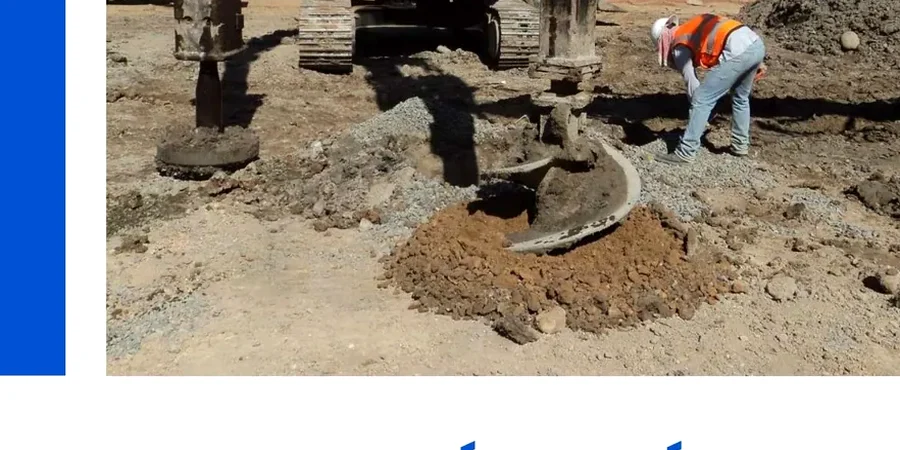
Technical reference image — Elk Grove

Local considerations

Elk Grove's build-out accelerated after the 1990s, pushing residential subdivisions and logistics warehouses into former agricultural lowlands where subsurface drainage was never engineered for structural loads. Several older commercial parcels south of Bond Road sit on undocumented fill that masks buried organic horizons; we have cored through decomposed rice-hull layers at fourteen feet that laboratory tests later classified as compressible peat. A stone column design that skips verification probing in these areas risks leaving soft pockets untreated, which translates into post-construction settlement that racks door frames and cracks slab-on-grade floors within two wet seasons. The design must also account for seasonal groundwater fluctuation — a two-foot rise between September and February can soften the column toe bearing layer if the embedment depth is cut too tight. When seismic demands govern, we pair the stone column grid with liquefaction assessment to confirm that densification extends deep enough to break the saturated silt seams susceptible to cyclic mobility.

Need a geotechnical assessment?

Reply within 24h.

Email: contact@geotechnical-engineering1.org

Explanatory video

Technical parameters

ParameterTypical value
Typical column diameter24 to 36 inches
Design depth range10 to 45 feet below grade
Area replacement ratio10% to 35%
Post-treatment bearing capacity4,000 to 8,000 psf
Settlement reduction factor2 to 4
Aggregate gradation (ASTM D448)No. 57 or No. 67 stone
Installation methodWet top-feed vibro-replacement
Design reference standardFHWA-NHI-10-016

Associated technical services

01

Geotechnical Investigation & Column Sizing

We log borings, run CPT soundings, and classify samples per ASTM D2487 to build the subsurface model that drives column diameter, spacing, and depth calculations.

02

Vibro-Replacement Design Package

We deliver stamped drawings showing the column grid, working platform specification, aggregate gradation, and acceptance criteria for post-treatment modulus verification.

03

Post-Installation Load Testing

We perform zone load tests or large-diameter plate load tests on completed columns to document the bearing capacity and modulus values required for the structural engineer's sign-off.

Applicable standards

FHWA-NHI-10-016 (Ground Improvement Methods), ASTM D1586 (Standard Penetration Test), ASTM D2487 (Unified Soil Classification), IBC Chapter 18 (Soils and Foundations)

Frequently asked questions

How much does stone column design cost for a typical Elk Grove site?

Design fees generally range from US$1,550 for a straightforward single-lot improvement to US$5,200 for a multi-acre commercial parcel requiring parametric analysis and load-test specifications. The spread depends on the number of borings, column count, and whether seismic densification checks are required.

When do stone columns work better than deep foundations in the Elk Grove area?

Stone columns become the cost-effective choice when the soft zone is shallower than 40 feet and the structure can tolerate a few inches of total settlement. They also accelerate consolidation, which avoids the months-long surcharge programs that delay slab pours on tight construction schedules.

What soil types in Elk Grove respond best to vibro-replacement?

Loose silty sands and low-plasticity clays with undrained shear strength above 10 kPa respond well. The technique is less suitable for thick organic deposits unless columns are closely spaced and combined with a bridging load-transfer platform.

How do you verify the stone columns meet the design intent?

We specify a combination of installation monitoring records, post-treatment CPT or SPT soundings between columns, and zone load testing. The acceptance criteria tie directly to the modulus and bearing values assumed in the foundation design.
Location and service area

We serve projects across Elk Grove and surrounding areas.

View larger map