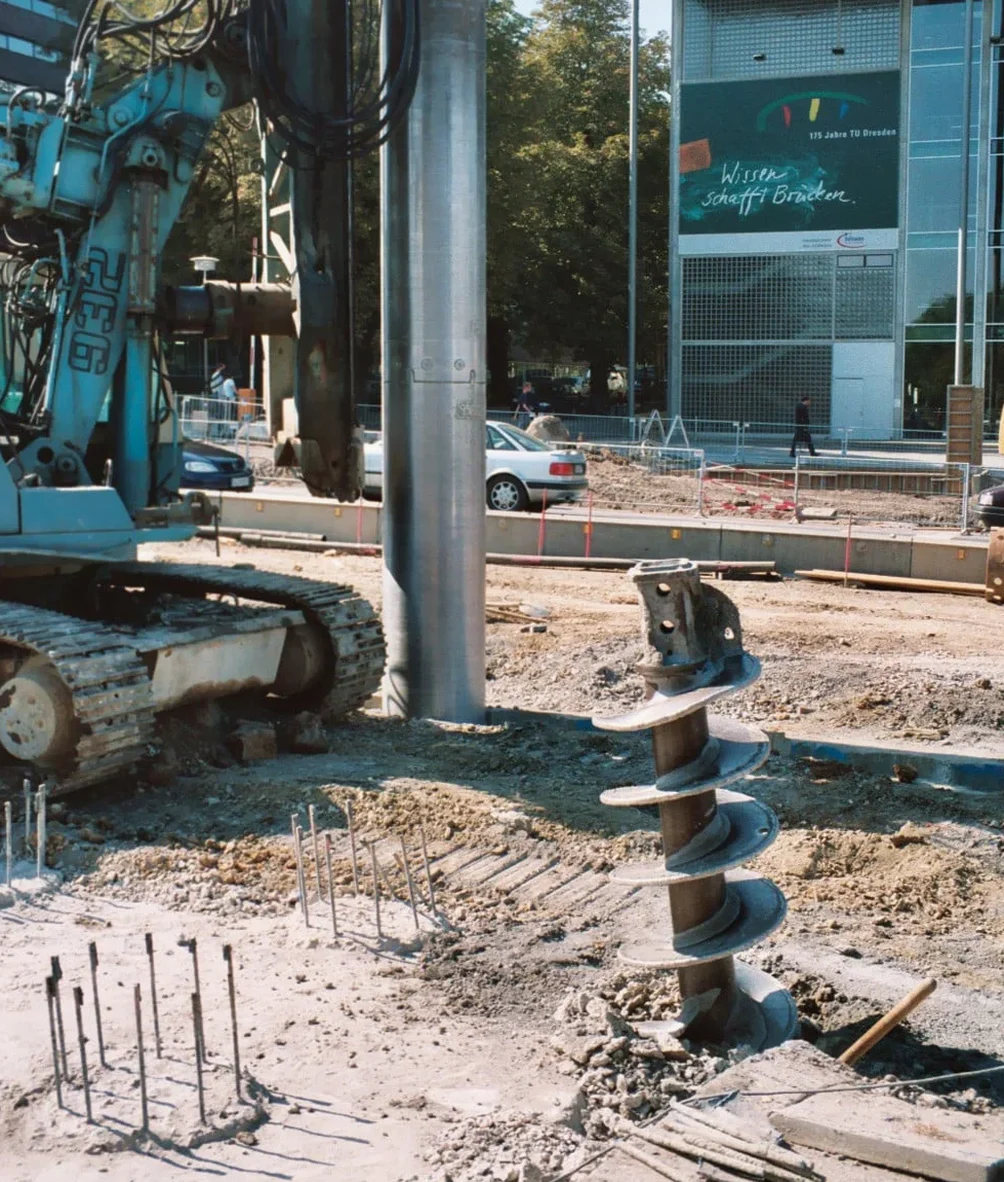
The International Building Code (IBC 2021) and ASCE 7-22 place Elk Grove squarely within a region where site class E and F soils dominate the subsurface profile. Much of this area sits on quaternary alluvium from the Cosumnes River system — fine-grained, compressible deposits that extend tens of feet deep. A shallow footing design here often triggers excessive settlement beyond the tolerable one-inch criterion. For that reason, the geotechnical team approaches each pile foundation design by first reconciling CPTu pore pressure dissipation data with laboratory consolidation curves, ensuring the neutral plane and downdrag loads are quantified before the structural engineer ever sees a pile schedule. Combining this with CPT testing refines the soil behavior type profile in zones where SPT energy corrections become unreliable, while a targeted liquefaction assessment verifies whether the loose sand lenses mapped at 15 to 25 feet depth meet the Youd-Idriss (2001) screening criteria under the M7.2 design event.
Pile capacity in Elk Grove is rarely governed by end bearing alone — the shaft resistance profile through compressible clays dictates the entire foundation economy.