Together, we solve the challenges of tomorrow.
LEARN MORE →In Elk Grove, the stability of natural and engineered earth structures is a critical component of residential, commercial, and infrastructure development. The category of Slopes & Walls encompasses the engineering principles and construction techniques required to manage soil retention, prevent erosion, and ensure the long-term integrity of graded sites. From analyzing the stability of a natural hillside before building a home to designing a reinforced concrete wall for a commercial subdivision, these services are fundamental to safe land use in a region characterized by its variable topography and expansive clay soils. A comprehensive approach, including detailed slope stability analysis, is not just a best practice—it is a necessity for protecting property and complying with local regulations.
The local geology of the Elk Grove area, situated within the Sacramento Valley, presents specific challenges that directly influence slope and wall design. Much of the region is underlain by the Mehrten and Laguna Formations, which include layers of clay, silt, sand, and gravel. Crucially, the presence of highly expansive clay soils is a dominant geotechnical concern. These soils undergo significant volume changes with seasonal moisture fluctuations, exerting substantial lateral pressure on any retaining structure. A thorough understanding of these soil-structure interactions is paramount when developing a robust retaining wall design that can withstand these cyclical loads without cracking or failing over time.
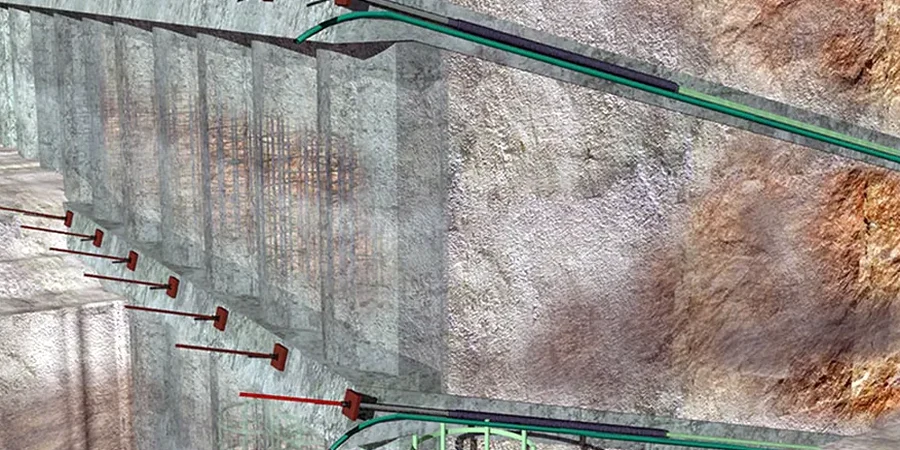
All work falling under the Slopes & Walls category in Elk Grove must adhere to stringent national and local standards. The primary regulatory framework is the California Building Code (CBC), which incorporates the International Building Code (IBC) with state-specific amendments. Chapter 18 of the CBC, Soils and Foundations, governs geotechnical investigations and design parameters. For earth retaining structures, designs typically conform to the allowable stress design (ASD) or load and resistance factor design (LRFD) methodologies, with seismic design provisions mandated due to the region's seismicity. Furthermore, the City of Elk Grove's Public Works Department enforces its own grading ordinance and improvement standards, which dictate specific requirements for drainage, slope inclinations, and the submittal of engineered plans. The use of specialized elements like active/passive anchor design must be carefully calculated and detailed to meet these code requirements for resisting overturning and sliding forces.
A wide array of development projects necessitates the expertise of geotechnical engineers specializing in this category. Custom home builders on gently sloping lots often require a cut-and-fill analysis and a restrained wall to maximize usable yard space. Large-scale residential developments, known as subdivisions, depend on massive soil nail walls and mechanically stabilized earth (MSE) blocks to create buildable pads. Infrastructure projects, including roadway widening along Laguna Boulevard or sound wall construction adjacent to Highway 99, rely heavily on advanced slope stability analysis and anchored wall systems to secure transportation corridors. Even commercial site work for retail centers or industrial parks in the city’s designated growth areas involves the design of loading dock walls and the stabilization of detention basin slopes.
A slope is an unretained, angled ground surface, often used for aesthetic transitions or when space allows a gentle incline. A retaining wall is a rigid structure built to support soil at a steeper angle than it would naturally maintain. In Elk Grove, walls are necessary when a project requires a grade change too steep for a stable slope, often due to limited space on a residential lot or to create level building pads in commercial developments.
Expansive clays swell when wet and shrink when dry, creating significant lateral earth pressures that can crack or push over an under-designed wall. For slopes, these soils are prone to surficial sloughing and erosion. Proper design must account for this by specifying low-permeability backfill, robust drainage systems behind walls, and soil treatment or deep foundations to isolate structures from the active zone of moisture fluctuation.
Most projects require a Grading Permit from the City of Elk Grove’s Public Works Department. If the wall is over a certain height, or supports a surcharge like a driveway, a Building Permit is also necessary. The process mandates the submittal of engineered plans, calculations sealed by a California-licensed civil engineer, and a geotechnical report demonstrating compliance with the California Building Code and local grading ordinances.
The process begins with a geotechnical investigation involving soil borings to characterize subsurface conditions. The data informs a slope stability analysis or wall design, which calculates factors of safety against sliding, overturning, and bearing capacity failure. After the design is permitted, the engineer often provides construction observation services to verify that site conditions match the design assumptions and that materials like backfill and reinforcement are placed correctly.