The first thing our team sets up on an Elk Grove site is the CPT rig or the hollow-stem auger drill, depending on access. We push steel rods into the soft clay and silty sand that define this part of the Sacramento Valley, measuring tip resistance and sleeve friction every two centimeters. Those numbers feed directly into our slope models. For a residential lot backing up to one of the city's many drainage channels, the difference between a stable slope and a slow rotational failure often comes down to a few degrees of friction angle measured in the lab. Our approach combines field data collection with in-situ permeability testing to understand how groundwater changes the effective stress profile during winter storms.
In the Laguna Creek formation clays, a 1.5:1 cut slope may be stable under drained conditions but can develop excess pore pressure during a 475-year earthquake—a detail that changes the design completely.
Methodology and scope
Elk Grove sits on Pleistocene-age alluvial fan and basin deposits—interbedded silts, clays, and fine sands that can weather into a stiff, desiccated crust in summer, then soften to a greasy consistency after the first heavy rain. What makes slope work here interesting is the presence of the Laguna Formation: a sequence of moderately expansive, overconsolidated clays that hold near-vertical cuts for weeks, then suddenly slough off when pore pressures equalize. We sample these materials with thin-walled Shelby tubes and run consolidated-undrained triaxial tests at the in-situ confining pressure. When a developer wants to grade a subdivision north of Whitelock Parkway, we map the stratigraphy, measure the residual strength along pre-existing slickensides, and model how a 3-meter-deep stormwater detention basin will change the seepage regime over the next fifty years. That's the difference between a subdivision that performs and one that starts moving after the second wet winter.
Local considerations
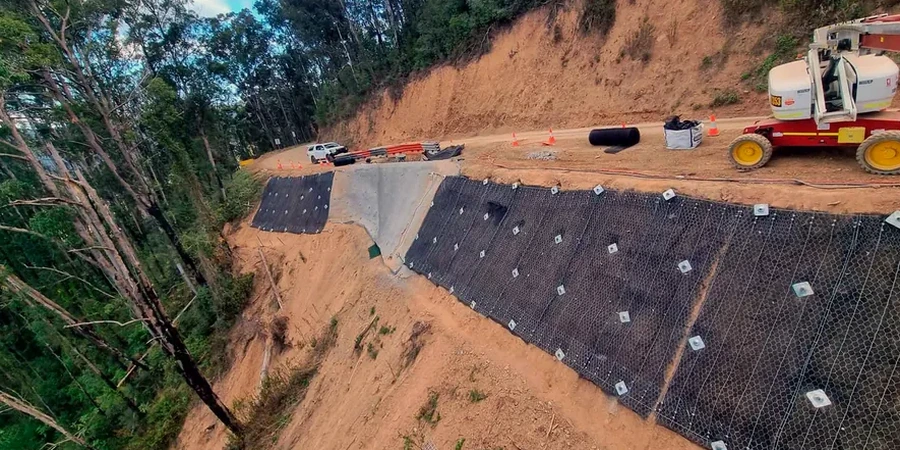
Elk Grove has transformed from a small farming town into the second-largest city in Sacramento County in roughly three decades, which means we are constantly grading land that was once alfalfa fields or seasonal wetlands. The old irrigation ditches and the subtle swales that drained snowmelt from the Sierra foothills left behind pockets of organic silt and peat that compress and shear under new fill loads. The biggest risk we see isn't the deep-seated failure plane—it's the shallow sloughing that happens when a homeowner cuts into a 2:1 slope to install a retaining wall without a drainage system. Water builds up behind the wall, the clay backfill saturates, and the whole assembly starts to lean. Our analyses identify these failure mechanisms early, specifying benched excavations, subdrain blankets, or soil nail reinforcement before the first yard of dirt is moved.
Frequently asked questions
How much does a slope stability analysis cost for a residential lot in Elk Grove?
For a typical single-family residential slope in Elk Grove—say a 15-foot cut with a proposed 2:1 configuration—the analysis and stamped report generally range from US$1,240 to US$4,260. The final cost depends on whether we need to mobilize a drill rig for sampling, the number of laboratory shear tests required, and whether seismic deformation analysis is needed. We can provide a fixed-fee proposal after a site visit.
What factor of safety does the City of Elk Grove require for slopes?
The city follows the California Building Code and IBC 2021, which typically require a minimum static factor of safety of 1.5 for permanent slopes. For seismic conditions, we use a pseudostatic coefficient (kh) derived from the ASCE 7-22 design spectrum, with a minimum factor of safety of 1.1. Specific requirements may vary by project, and we coordinate directly with the city's Building Safety Division to confirm acceptance criteria.
Do you analyze canal and levee slopes for the drainage districts around Elk Grove?
Yes, we have experience with the earthen levees and canal banks managed by Reclamation District 1000 and other local agencies. The analysis focuses on rapid drawdown conditions—when water levels drop quickly after a storm—which is often the controlling case for the silty sand layers beneath the levee prism. We use USACE EM 1110-2-1902 methodology and staged undrained strength parameters.
How do you handle the expansive clay problem in Elk Grove slope design?
The Laguna Formation contains clays with a plasticity index often exceeding 25, which puts them in the high-expansion category. We measure the swell pressure and free swell in the lab, then design slope cover systems that include a 2- to 3-foot layer of non-expansive fill over the clay surface, along with positive drainage to keep moisture content stable. For deeper cuts, we may specify lime treatment or geogrid reinforcement to control long-term heave.
What's the difference between a slope stability analysis and a retaining wall design?
A slope stability analysis evaluates whether an unreinforced soil mass will fail along a potential slip surface, considering the soil strength and groundwater conditions. A retaining wall is an engineered structure that provides external support to the soil. Often the two go together—we first check if the global slope is stable behind the wall location, then we design the wall for local stability. On a typical Elk Grove lot with a 6-foot grade difference, both analyses are usually required by the city before issuing a grading permit.